
Day two of our adventure in Palawan started with another unfortunate announcement: the Coast Guard cancelled the Puerto Princesa Underground River tour for the second straight day because the river had apparently overflowed due to heavy rains from the previous night. But that definitely didn’t dampen my mood. After all, there are other things to do at Sitio Sabang.
Sitio Sabang
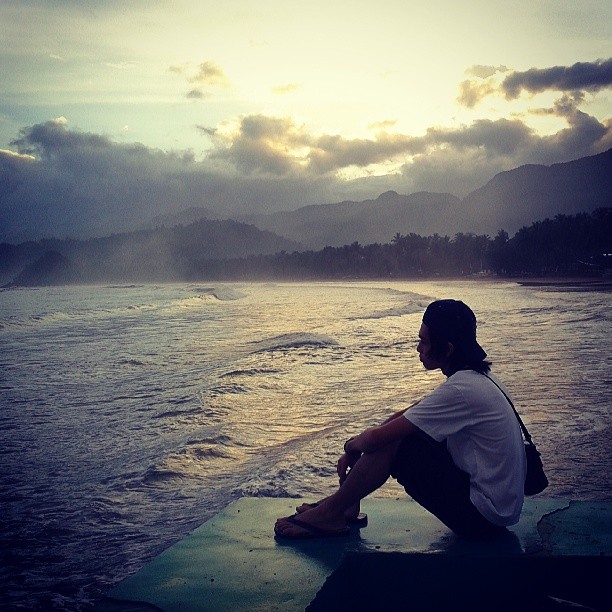
The ferry wharf/breakwater where motor bancas pick up tourists going to the Underground River is a pretty good place for people who love seaside photos to go berzerk with their cameras. You can see islands covered in fog (especially at around 6 to 7 in the morning) that make fantastic backdrops for emotional photos. To the left of the breakwater is a rocky portion of the seashore that’s also great for photo ops. A sandy beach is located to the right of the breakwater. It’s not like the white-sand beaches some parts of Palawan are known for, but it’s clean enough to bathe in. And it’s great for photo ops, too.
Pension houses and restaurants (and even carinderias) can be found in clusters in the area surrouding the wharf. If you want to be among the first in line for the tour, staying in one of these pension houses is a pretty good idea.
After taking photos to our hearts’ content, we proceeded back to Honda Bay. The bay, a half hour ride from the city proper, is riddled with islands where beach resorts can be found. We stopped by Elephant Cave for a quick photo shoot.
Karst Mountain/Elephant Cave
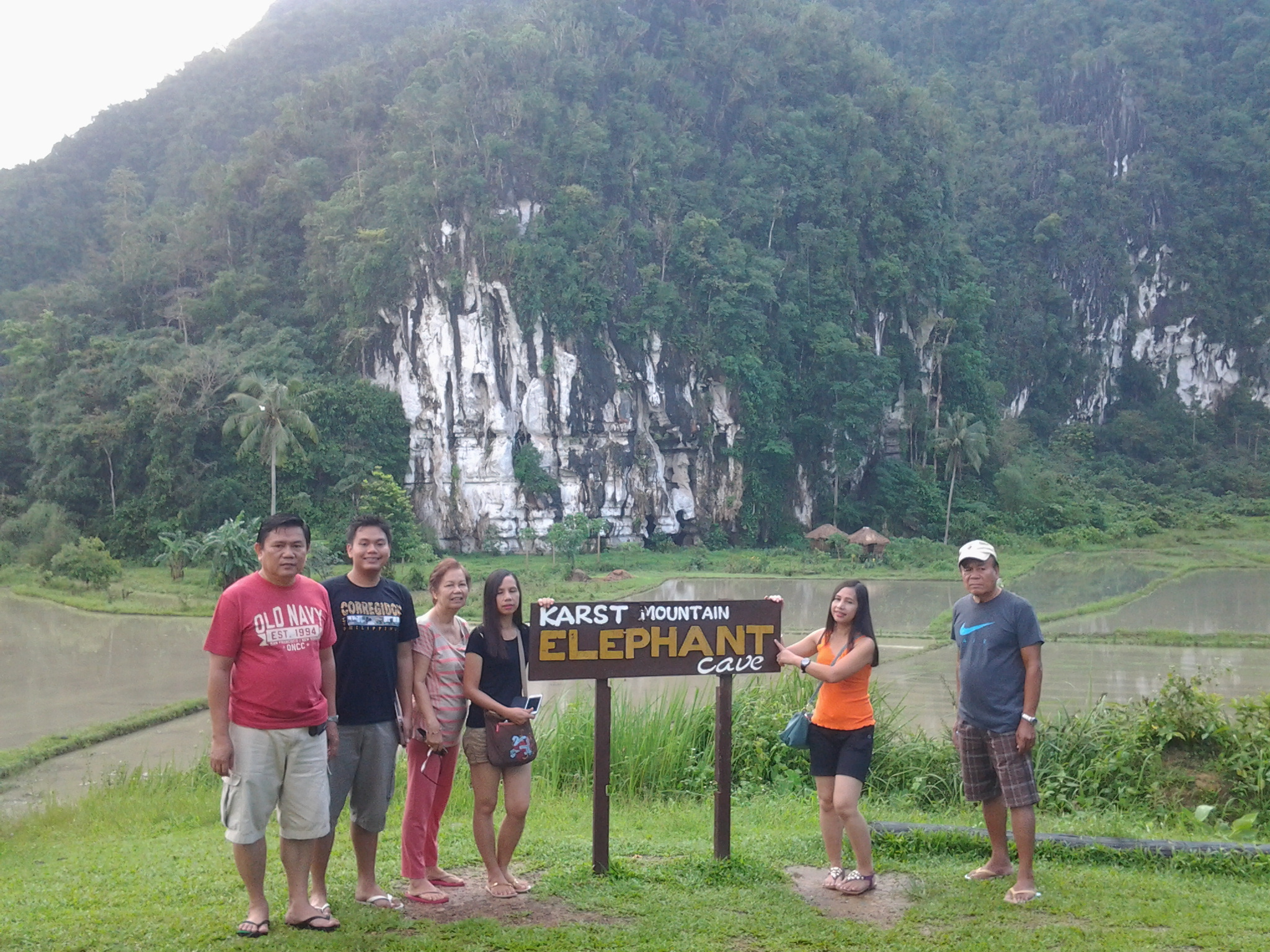
There’s nothing much to do here except take pictures. Karst Mountain offers a scenic view of what appears to be limestone walls and farmlands. The entrance to Elephant Cave is a bit hidden in trees. I am not aware of any tourist activity held there. The cave is named as such due to rock formations that resemble elephants. Here’s a quick tidbit though. I saw a sign near the viewing platform that said Karst Mountain/Elephant Cave is the spot of one stage in The Amazing Race Philippines.
Honda Bay
Honda Bay is located in Puerto Princesa City. Several islands and islets dot the bay, some of which have been converted into resorts. Probably the most infamous resort found here is the Dos Palmas Island Resort. If you could recall, this is where American missionaries Martin and Gracia Burnham, and a few other local tourists, were abducted by the Abu Sayaff terror group. Our guide told us that in recent times, tourists need a special permit to gain access to the island in an effort to avoid a repeat of those abductions.
The main tourist activity at Honda Bay is island hopping! If you plan to really enjoy this, you have to allocate at least five to six of your Earth hours. Tourists get to travel three islands, each offering different forms of fun. The travel agency grouped us with other tourists, most of them foreigners. I like to refer to ourselves as “tourmates”. We were assigned one tour guide. The first island we “hopped” on to is Cowrie Island, named after a kind of shell.
Cowrie island
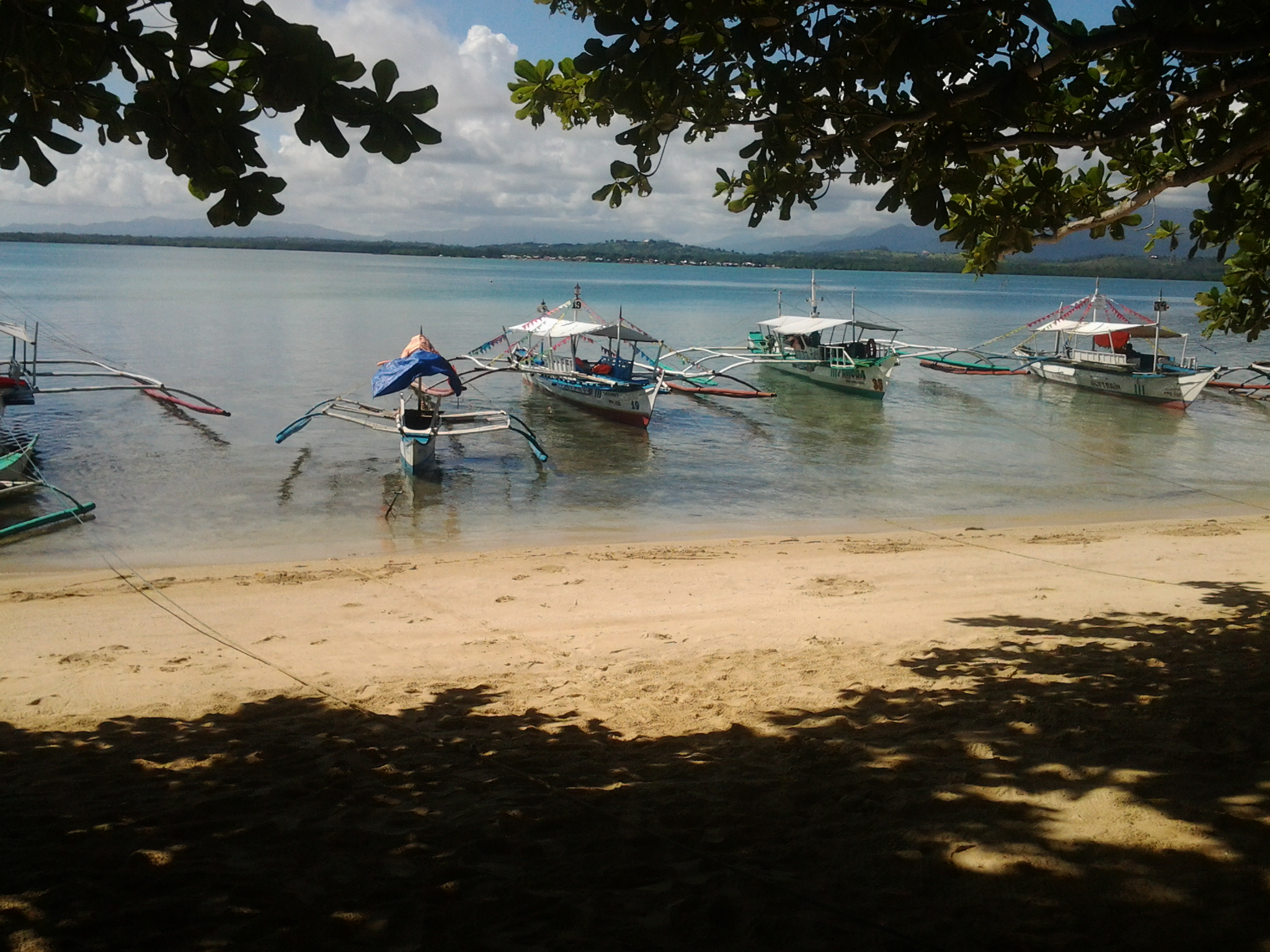 Cowrie Island is a small island with semi-white sand beach and a mangrove forest. The water is very clear, and a portion of the beach is lined with sea grass. It’s a great place for swimming or just dipping in the water. It’s about 10 minutes away from the mainland. As it was past 11 AM when we arrived, our guide grilled our lunch as we roamed the island. There are wooden cottages around where tourists can relax. A mess hall of sort serves food for people whose tourist package does not include food. The lack of technology and electricity on the island is a great escape from the fast lives brought about by the modern age most of us thrive in.
We proceeded to the second island at around 1 PM.
Starfish Island
As the name implies, the island is abundant with starfish of different varieties. Like Cowrie Island, Starfish Island is a good place to swim in. Wooden cottages where tourists can relax are also found here. What makes it stand out though, is that it’s a good snorkeling site. Corals, where schools of tropical fish reside in, line the seabed a few meters from the shore. One can rent snorkelling gear at the entrace of the wharf in the mainland. Tourists must bring bread to feed the fish. I’ve seen a lot of them, but two really stood out – a yellow butterfly fish and what I think is a blue tang (remember Dory from Finding Nemo?). The only thing that sucks though, is that there’s no freshwater on the island. The water they use in bathrooms is seawater. Meaning, one can’t wash away that sticky, salty feeling after submerging in briny water until he/she gets back to the mainland (remember this is only the second island; there’s still a third that needs to be visited).
LuLi Island
The third island is called LuLi Island. The name is a portmonteau of the words “lulubog” (sink) and “lilitaw” (arise/emerge), which is exactly what the island does depending on the tide. There’s really nothing much to do here but swim and enjoy the ocean. There’s a diving board where swimmers could dive into the water from. Swimming is limited to a small area though, as the water surrounding the island is where poisonous jellyfish and stonefish (whose venom can kill a person in minutes) live in.
The tour ends at 5 PM, even if you just started it a couple of hours earlier (as stated earlier, it’s best to allocate your whole day for this activity). After resting up and eating dinner, we proceeded to Iwahig River for the Firefly River Cruise.
Iwahig River Firefly Cruise
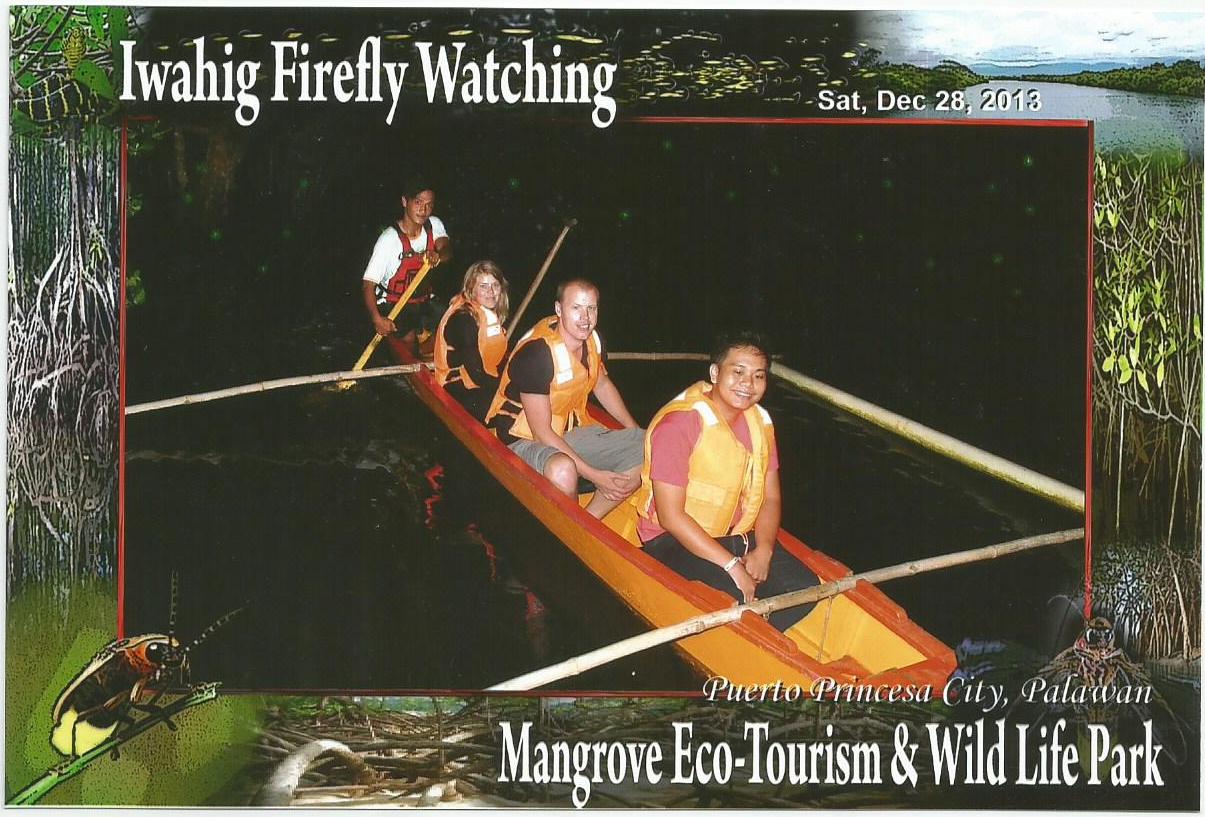
The tour begins at around 6 PM, when the sun is down (obviously) until all the guests have been accomodated, regardless of the time. One of the river guides told us that the latest tour they’ve done was at around 2 in the morning. Only three tourists per banca are allowed, together with two guides. The tour begins at a little pier 3 kms. away from the river mouth, and goes 1 km. downstream. The river, about 10-15 meters deep and about 10 meters deep, is lined with mangrove forests on both sides. Fireflies, the stars (pun intended) of the show, take residence in the trees by the river bank. When red light is shone on them, they respond by illuminating the trees with the bioluminiscent bodies – sort of like a year-round Christmas tree! It’s a pretty amazing sight, given that it’s rare to see fireflies today. These tiny bugs are indicators of a clean environment (like dragonflies), so forget any idea of looking for a colony here in Iloilo. They are appalled most especially by noise and light pollution.
Oh and if you’re lucky and the night sky is clear, the guides might give you a short lecture about constellations on the trip back to the pier.
Hopefully, the local government of Puerto Princesa City is able to maintain these amazing nature spots for ages to come.

